Plumbing Estimating in Corpus Christi
Precise plumbing takeoffs covering every pipe, fitting, and fixture, sized to the exact code of your jurisdiction. Tailored to Nueces County requirements.
Texas is one of the only states where the plumbing code itself is a moving target depending on which city you're building in. The Texas State Board of Plumbing Examiners has adopted both the Uniform Plumbing Code (UPC) and the International Plumbing Code (IPC), and while most Texas municipalities enforce the IPC, Austin, Houston, and San Antonio still enforce the UPC. Fixture unit calculations, vent sizing, and drainage requirements aren't identical between the two codes - which means a plumbing estimate built on the wrong code's assumptions can under- or over-size a system before a single pipe goes in the ground.
Our plumbing estimating services account for that from the start - we confirm which code governs the jurisdiction before pricing fixture units, pipe sizing, and venting, rather than assuming one code applies statewide.
How a Plumbing Estimate Is Actually Built
Plumbing doesn't price like most other trades. Where framing or drywall scales roughly with square footage, plumbing scales with fixture count and fixture unit load the demand each fixture places on the water supply and drainage system. That's what actually determines pipe sizing, not floor area. Our takeoffs are built around that:
- Water supply sized by water supply fixture units (WSFU) per fixture group, not a flat pipe-diameter assumption.
- Drainage and venting sized by drainage fixture units (DFU), with vent sizing calculated to match, since undersized venting is one of the most common (and expensive to fix after drywall) plumbing mistakes.
- Gas piping sized by BTU demand across all connected appliances, priced separately from water supply and drainage.
- Fixtures and trim priced by grade and quantity, split between rough-in (supply and drainage lines before walls close) and trim-out (fixtures and finish work after), since those are typically two separate labor pushes on the schedule.
- Water heating sized to actual demand (unit count and fixture load for multifamily, occupancy type for commercial), not a rule-of-thumb tank size.
For commercial restrooms specifically, fixture counts are also checked against ADA accessibility clearances, since minimum fixture ratios and accessible-stall requirements directly affect both fixture count and layout cost.
Plumbing by Project Type
Residential. Single-family and multifamily rough-in and trim, water heater sizing matched to unit count, and gas piping for kitchen and outdoor appliances.
Commercial. Restroom cores sized to occupancy load and ADA fixture ratios, grease waste and interceptor requirements for food service, and larger-diameter supply and drainage mains sized to building-wide demand rather than per-fixture estimates.
Industrial. Process water systems, chemical waste and neutralization, and larger gas and compressed-air-adjacent piping scope priced by spec rather than fixture count, since industrial plumbing is closer to process piping than building plumbing. See our Industrial Construction Estimating Services page for how that scope is handled.
Why This Matters for Bidding
A plumbing bid that under-sizes fixture units or gets venting wrong doesn't fail at the estimate stage it fails at inspection, after the walls are already closed. Reworking drain venting after drywall is one of the more expensive corrections in residential and light commercial construction, which is exactly why we check code jurisdiction and fixture unit math before pricing goes out, not after.
Software and Standards
Plumbing takeoffs are built in Bluebeam and Planswift, priced against RSMeans and current Texas labor and material rates, and checked against whichever of the UPC or IPC governs the project jurisdiction, along with IAPMO's published fixture unit tables where UPC applies. We follow the standards set by the Texas State Board of Plumbing Examiners (TSBPE).
Building in Corpus Christi: What Changes the Estimate
Corpus Christi Construction Market Overview
Building in Corpus Christi is defined by its coastal environment. The market is driven by the massive industrial and petrochemical presence at the Port of Corpus Christi, alongside coastal tourism and residential development.
Estimating in Corpus Christi requires specific expertise in coastal construction: calculating costs for wind-rated assemblies, impact-resistant glazing, corrosion-resistant materials (like stainless steel hardware and special HVAC coatings), and elevated foundations in flood zones.
Corpus Christi Permitting & TWIA
The most significant factor in Corpus Christi estimating is compliance with the Texas Windstorm Insurance Association (TWIA). Our estimates capture the premium costs associated with TWIA-certified materials, specific nailing/fastening patterns, hurricane tie-downs, and the specialized engineering inspections required to certify a building on the coast.
Our Process for Corpus Christi Projects
Confirm whether the project falls under UPC (Austin, Houston, San Antonio) or IPC to ensure accurate fixture unit math.
Calculate WSFU and DFU loads to accurately size water supply, drainage, and venting.
Measurement of all sub-slab and above-ground piping, fittings, fixtures, and specialty systems.
Apply current Texas material pricing and labor rates split by rough-in and trim-out phases.
Frequently Asked Questions
Does my project fall under the UPC or the IPC?
It depends on your city. Austin, Houston, and San Antonio enforce the UPC; most other Texas municipalities enforce the IPC. We confirm jurisdiction before pricing so fixture unit and venting calculations match the code that actually applies.
Can you estimate plumbing separately from the rest of the MEP scope?
Yes this page covers plumbing as a standalone trade. If you need mechanical and electrical priced alongside it as a coordinated system, see our MEP Estimating Services page.
How do you handle water heater sizing in a multifamily estimate?
Water heater capacity is sized to total fixture demand across the unit count, not a flat per-unit assumption central systems and individual unit heaters are priced differently based on which approach the design calls for.
Do your estimates include Texas Windstorm (TWIA) compliance?
Yes. This is mandatory for coastal estimating. We price the specific impact-rated windows, hurricane straps, enhanced roofing assemblies, and upgraded framing requirements necessary to pass windstorm inspections.
Do you account for corrosion-resistant materials?
Yes. For projects near the coast, we upgrade material specifications in the estimate-such as pricing stainless steel fasteners, coastal-coated HVAC units, and specialized exterior paints to withstand the salt air.
Sample Projects Across Texas
Recent takeoffs and estimates delivered for Texas contractors.
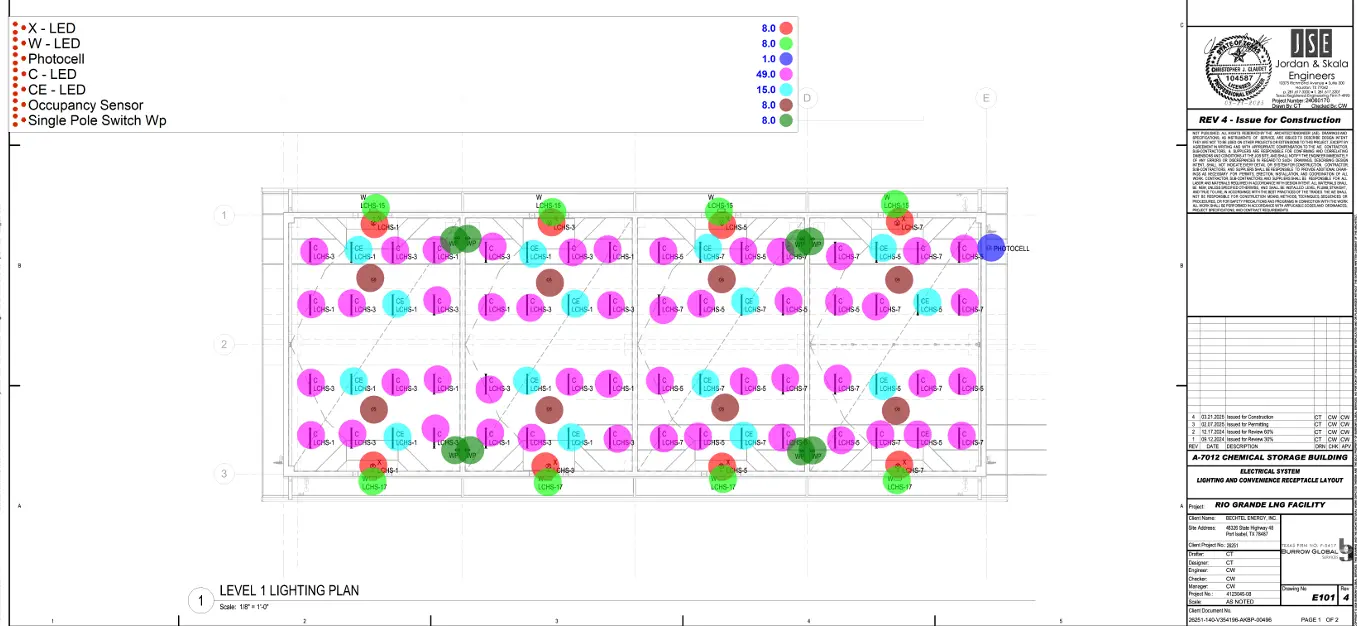
Commercial Electrical Takeoff
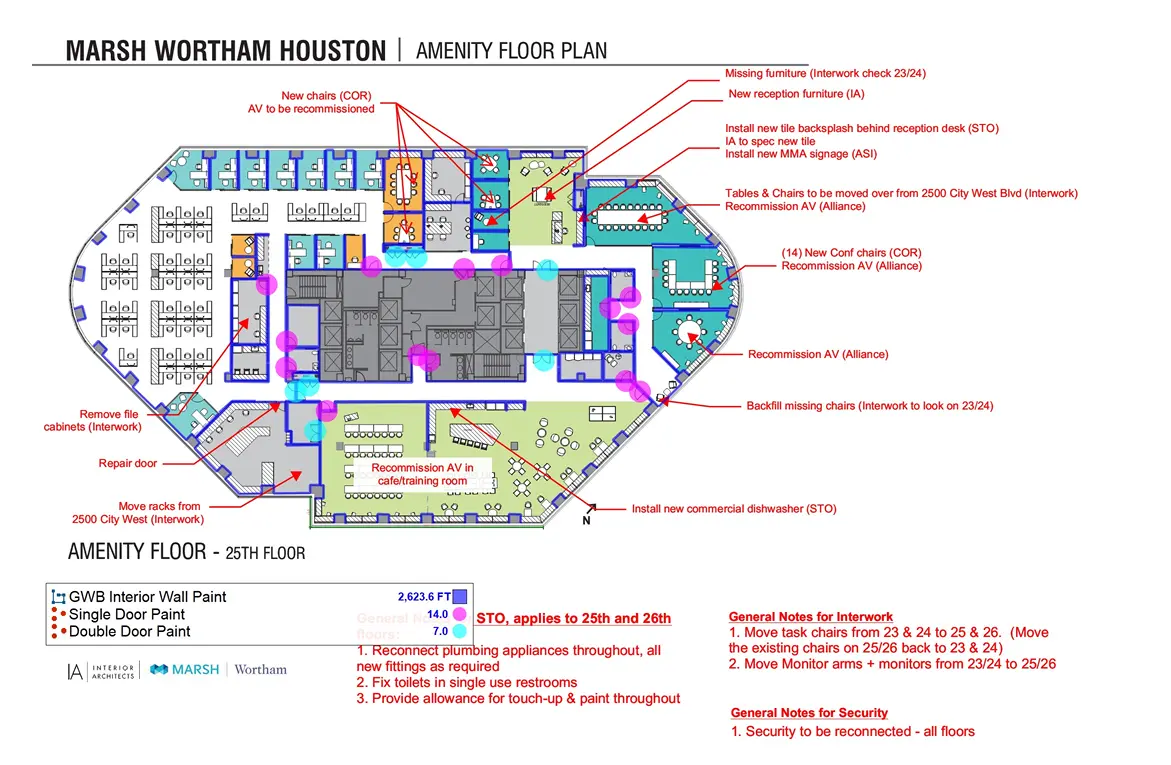
Exterior Commercial Paint