Flooring Estimating in Lubbock
Precise area takeoffs and pattern calculations for all commercial and residential floor coverings. Tailored to Lubbock County requirements.
Flooring estimating requires precise area calculations, but it's the details that make an estimate accurate: waste factors based on room shape, pattern matches for large-format tile, transitions between materials at doorways, and floor preparation scope that varies by existing conditions. A flat square-footage rate applied uniformly across a finish schedule with carpet in offices, large-format tile in corridors, and LVT in retail zones will be wrong on at least two of those three - each material has its own waste factor, ordering convention, and installation requirement.
Our flooring and tile takeoffs are built material by material and room by room, not a blended rate across the floor plan.
Flooring Scopes We Estimate
Resilient Flooring and Carpet
LVT, VCT, sheet vinyl, broadloom carpet, and carpet tile. We calculate exact square footage, apply appropriate waste factors based on roll width or tile size, and quantify all wall base (rubber or wood). Carpet is priced by the square yard, with roll-width waste calculated based on the room's dimension relative to standard broadloom widths - a step most flat-rate estimates skip.
Tile and Stone
Ceramic, porcelain, natural stone, and mosaic tile for floors, walls, and backsplashes. We estimate the tile, thinset/adhesive, grout, waterproofing membranes (Schluter systems), and metal edge trims. Large-format tile (24"x24" and larger, increasingly common on Texas commercial projects) carries a higher waste factor on complex floor plans than standard 12"x12" tile, and we calculate that separately.
Wood Flooring
Solid hardwood, engineered wood, and laminate, including underlayment, adhesives, and transition moldings. In Texas's climate, engineered wood is more commonly specified than solid hardwood for below-grade and high-humidity applications - the estimate reflects the actual specified product, not an interchangeable average.
Polished and Epoxy Concrete
Surface grinding, densifiers, sealers, and epoxy coatings, estimated by square footage and the specified number of grinding steps or coating layers. A two-pass polish and a six-pass polish are not the same estimate.
Why Waste Factors Are Not Interchangeable
A carpet tile estimate with a 5% waste factor is reasonable. A diagonal large-format porcelain tile estimate with 5% waste is wrong - diagonal cuts against a room's perimeter on large-format tile can push waste to 15-20%, and the difference between those two numbers on a significant floor area is real cost, not a rounding error. We apply waste factors by material, installation pattern, and room shape rather than a default percentage across the whole scope.
Software and Standards
Flooring takeoffs are built in Bluebeam and Planswift, with tile waste factors calculated from actual room dimensions and pattern orientation, and pricing benchmarked against RSMeans and current Texas labor and material rates.
Building in Lubbock: What Changes the Estimate
Lubbock Construction Market Overview
Known as the "Hub City," Lubbock is the economic, educational, and healthcare center of the South Plains. The construction market is anchored by constant expansion at Texas Tech University, a massive medical district, and steady agricultural and energy-sector industrial builds.
Estimating in Lubbock requires accounting for the High Plains environment: high winds, dust, and significant temperature swings. Material logistics can also impact costs, as Lubbock's distance from major manufacturing centers can increase freight costs compared to the I-35 corridor.
Lubbock Permitting & Wind Codes
The City of Lubbock Building Safety Department enforces codes with a specific focus on high wind design. Because Lubbock regularly experiences severe straight-line winds and dust storms, our estimates account for appropriate wind-rated roofing assemblies, reinforced masonry, and enhanced structural connections.
Our Process for Lubbock Projects
We analyze the room finish schedule to map exactly which materials go in which rooms.
Digital takeoff of net floor areas, deducting permanent cabinetry or equipment.
Measuring the linear footage of wall base and doorway transitions between different materials.
Applying specific waste factors based on the material type, room shape, and installation pattern.
Frequently Asked Questions
How do you calculate waste for flooring?
Waste factors vary significantly. Carpet tile might only need 5% waste, while a large-format porcelain tile laid on a diagonal in a room with many angles might require 15-20% waste. We apply waste factors logically based on the material and floor plan.
Do you include floor prep?
Floor preparation (leveling, patching, moisture mitigation) is often an unknown until the existing floor is removed. For new construction, we include standard prep. For renovations, we typically include an allowance based on historical averages, clearly noted as a contingency.
Can you estimate wall tile?
Yes. We provide detailed takeoffs for wainscoting, full-height bathroom walls, kitchen backsplashes, and exterior tile veneers, including all required waterproofing and trim pieces.
Do you estimate institutional projects like university buildings?
Yes. We estimate higher-education facilities, accounting for the specialized architectural requirements (like the Spanish Renaissance style mandated at Texas Tech), complex MEP systems, and institutional-grade finishes.
Do your estimates factor in West Texas freight costs?
Yes. Geographic isolation can affect material pricing. We factor in appropriate freight and delivery costs for heavy materials (like structural steel or specialized equipment) that must be shipped into the Lubbock area.
Sample Projects Across Texas
Recent takeoffs and estimates delivered for Texas contractors.
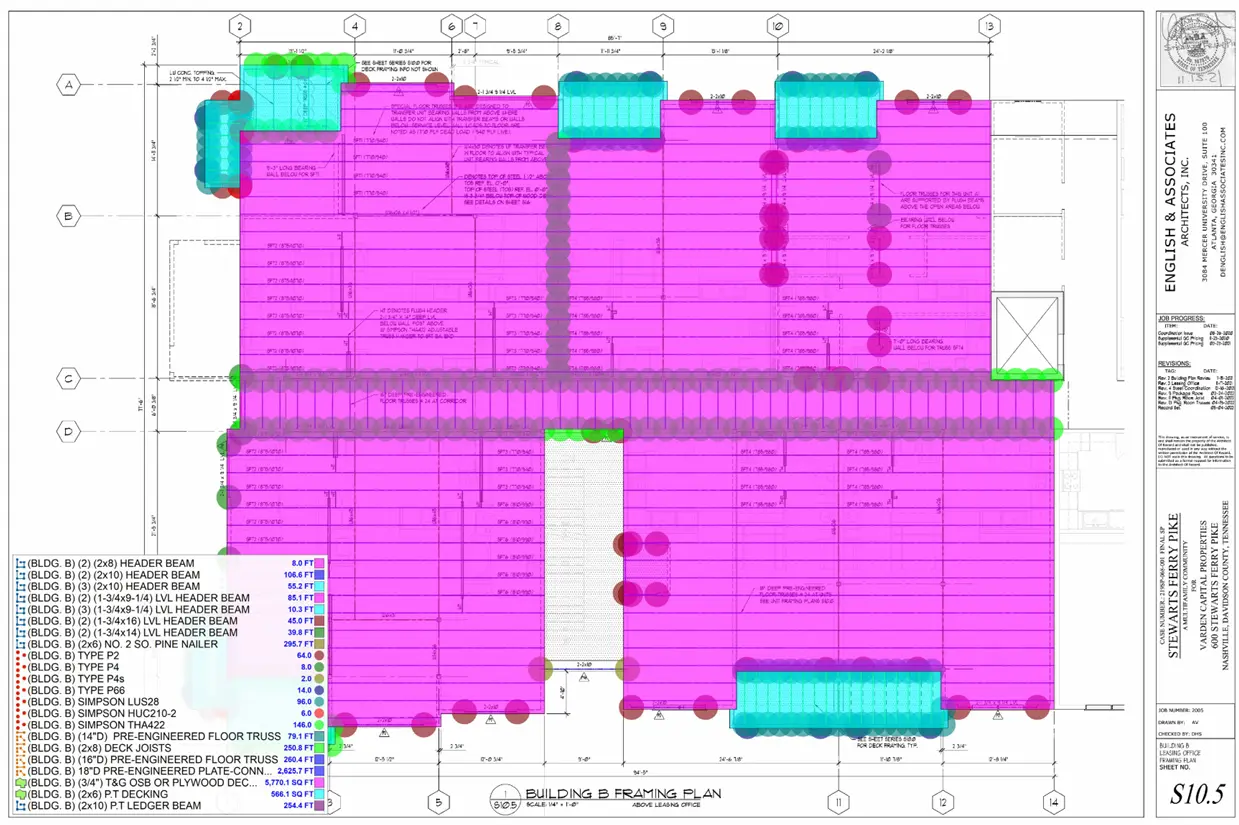
Subdivision Lumber Takeoff
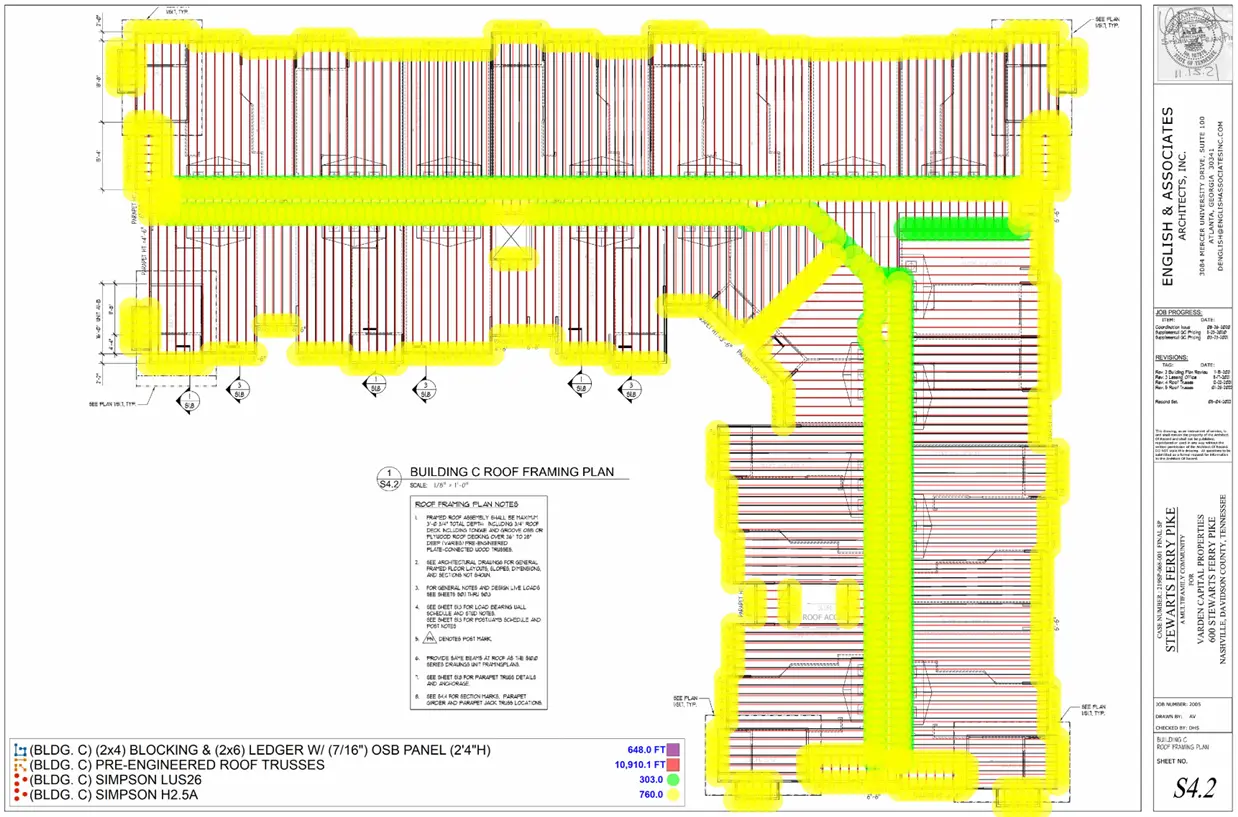
Custom Home Lumber Package