Mechanical Estimating in McKinney
Precise mechanical estimates that account for Texas's demanding climate load and DOE South Region efficiency standards. Tailored to Collin County requirements.
Texas doesn't get the option of pricing HVAC equipment at the national minimum efficiency rating. The U.S. Department of Energy places Texas in its South Region for residential air conditioner and heat pump efficiency standards, which carries a higher minimum than states further north - 14.3 SEER2 for most split systems under 45,000 BTU, versus 13.4 in the DOE's North Region. That's not a rounding difference in an estimate - it's an equipment cost floor that a national pricing template built around a lower regional minimum will get wrong on every Texas mechanical estimate it touches.
Our mechanical estimating services price equipment to the DOE region that actually applies, and size systems around Texas's cooling-dominant climate load rather than a generic degree-day assumption that doesn't reflect what a Houston or Dallas summer does to a building's HVAC demand.
How a Mechanical Estimate Is Built
Mechanical pricing is driven by load, not floor area, and the load calculation itself is where an estimate lives or dies:
- Load calculation for residential, sized per ACCA Manual J (heating and cooling load), Manual S (equipment selection), and Manual D (duct design); for commercial, sized per ASHRAE load methodology. Getting the load calculation right is what determines equipment tonnage, and equipment tonnage is the single largest line item in most mechanical estimates.
- Equipment selection priced to the correct DOE efficiency region (South Region minimums apply statewide in Texas), not a lower national baseline that undercounts equipment cost.
- Ductwork sized and routed per the duct design, priced by material, insulation type, and linear footage, with coordination flagged where duct runs compete with structural or other MEP routing.
- Refrigerant piping and controls line set sizing, refrigerant type, and control system scope priced to the specified equipment, since refrigerant type has been shifting under federal phase-down rules and affects both equipment and installation cost.
- Ventilation and exhaust outdoor air, exhaust, and makeup air systems sized to occupancy and code ventilation requirements, priced as their own scope rather than folded into general ductwork.
Mechanical by Project Type
Residential. Central HVAC sized per Manual J/S/D, priced to DOE South Region equipment minimums, with duct design and equipment selection matched to actual house load rather than a rule-of-thumb tonnage-per-square-foot estimate.
Commercial. Rooftop units, VAV systems, and central plant equipment sized to ASHRAE occupancy load, with ventilation rates driven by occupancy type and code minimums.
Industrial. Process cooling, compressed air, and steam generation systems sized to equipment and process loads rather than occupant comfort a fundamentally different discipline from building HVAC. See our Industrial Construction Estimating Services page for that scope specifically.
Why the Load Calculation Is the Real Estimate
A mechanical estimate built on a guessed tonnage instead of a real Manual J or ASHRAE load calculation is wrong in a way that doesn't show up until the system is running a Texas home or building sized too small for its actual cooling load runs constantly and still can't keep up in August; sized too large, it short-cycles and wastes both installation cost and energy. That's why we run the load calculation first and price equipment to what it actually shows, rather than pricing a tonnage assumption and calling it an estimate.
Software and Standards
Mechanical takeoffs are built in Bluebeam and FastDUCT/FastPIPE, with load calculations run to ACCA Manual J/S/D for residential and ASHRAE methodology for commercial, and equipment priced against current DOE efficiency standards for the applicable region, cross-checked with RSMeans and current Texas labor and material rates.
Building in McKinney: What Changes the Estimate
McKinney Construction Market Overview
McKinney offers a unique construction environment: a fiercely protected historic downtown square surrounded by explosive, modern suburban and commercial growth along the Highway 121 (Sam Rayburn Tollway) and US 75 corridors.
Estimating here requires versatility. We price meticulous, code-heavy restorations in the Historic District, massive new retail and corporate office parks in Craig Ranch, and high-end custom home developments in the city's expanding northern footprint.
McKinney Permitting & Historic Review
While new development along the highways follows standard, albeit strict, suburban commercial codes, building in Central McKinney is different. Projects near the square are subject to the Historic Preservation Advisory Board (HPAB). Our estimates for historic McKinney projects account for matching period-specific materials, specialized restoration labor, and the extended timeline of historic review.
Our Process for McKinney Projects
Run Manual J or ASHRAE load calculations to determine actual cooling and heating demand.
Select and price equipment meeting DOE South Region minimums based on the load calculation.
Digital measurement of all supply, return, and exhaust ductwork, calculated by material and insulation.
Apply current material costs and MCA/SMACNA labor rates adjusted for Texas installation conditions.
Frequently Asked Questions
Does mechanical estimating include ductwork, or just equipment?
Both ductwork is sized and priced as its own line item based on the duct design (Manual D for residential, engineered design for commercial), not bundled into a flat equipment price.
Why does Texas have a higher minimum SEER2 requirement than some other states?
Texas falls in the DOE's South Region, which the federal government classifies with a higher cooling-efficiency minimum than northern states due to regional cooling load. That minimum applies statewide and directly affects equipment cost in every Texas mechanical estimate.
Can you estimate mechanical separately from electrical and plumbing?
Yes this page covers mechanical as its own trade. If you need all three priced together as a coordinated system, see our MEP Estimating Services page.
Can you estimate historic building renovations in Downtown McKinney?
Yes. We estimate the specialized labor and materials required for historic preservation, such as tuckpointing historic brick, restoring original millwork, and retrofitting modern MEP systems into older structures.
Do you estimate commercial development along the 121 corridor?
Absolutely. We estimate new retail centers, office buildings, and multi-family wraps in the Craig Ranch area and along the Sam Rayburn Tollway, using current Collin County pricing.
Sample Projects Across Texas
Recent takeoffs and estimates delivered for Texas contractors.
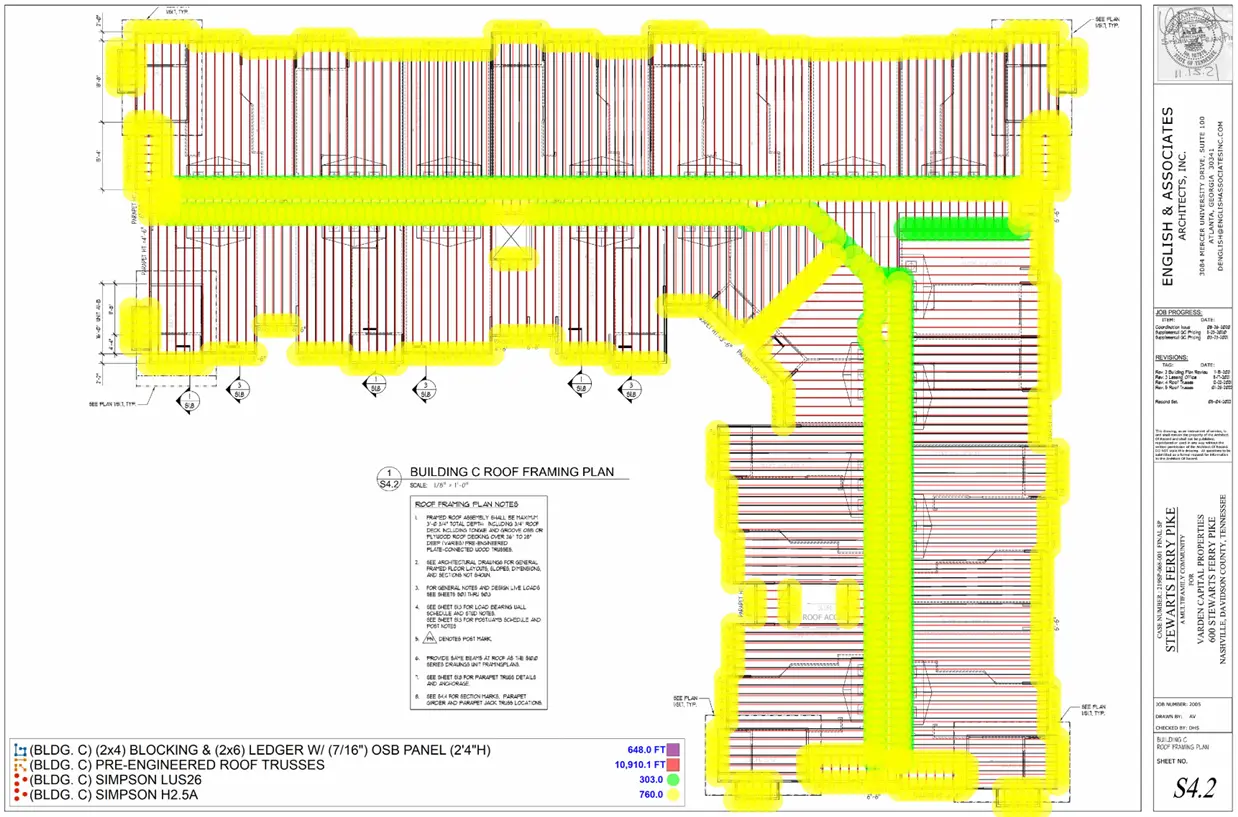
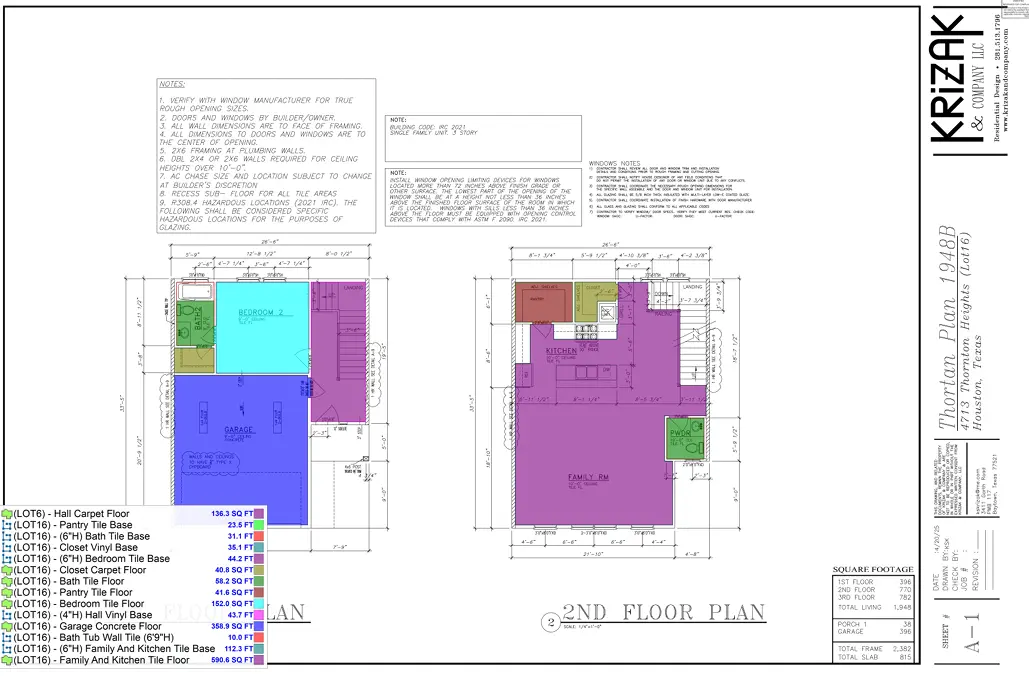
Custom Home Lumber Package
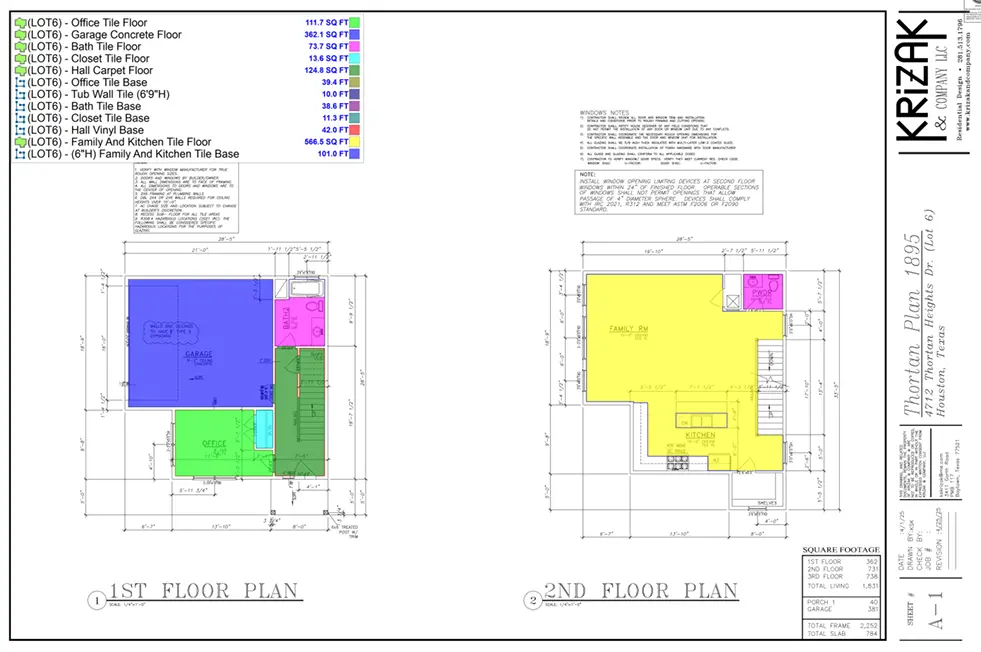
Commercial Flooring Project