Masonry Estimating in Odessa
Brick veneer and CMU takeoffs with expansion joints, flexible ties, and flashing priced as real line items - not folded into an allowance. Tailored to Ector County requirements.
Most masonry in Texas isn’t structural - it’s brick veneer, a single wythe of brick tied back to a wood-framed wall, which is the dominant look across Texas residential and light commercial construction. That distinction matters for the estimate: veneer is priced and detailed differently than structural CMU or full masonry bearing walls, and it interacts directly with something we’ve already flagged on our Concrete Estimating Services page - the expansive clay soil common across much of Texas. A brick veneer wall tied rigidly to a foundation that’s designed to move with the soil will crack. That’s why the Brick Industry Association’s guidance on horizontal expansion joints and flexible tie systems isn’t optional detailing on a Texas job - it’s a functional requirement, and it’s a real line item in the takeoff, not an afterthought.
What’s in a Masonry Takeoff
- Brick and block quantities, calculated from the drawings - not a flat square-foot multiplier. Coverage varies by unit size, mortar joint thickness, and bond pattern, so an accurate takeoff counts actual units required for the specific pattern shown, not an average.
- Mortar and grout - quantified separately from unit counts, sized to joint thickness and, for reinforced CMU, cell fill requirements.
- Ties, anchors, and flashing - critical, frequently underestimated components. Veneer ties, expansion joint material, and through-wall flashing at heads and sills are priced as their own line items, since missing them is one of the most common gaps in a masonry estimate.
- Reinforcement - rebar and bond beam reinforcement for structural CMU, sized to the structural drawings.
- Specialty units - lintel block, sill block, corner units, and half-high units for CMU; arches, soldier courses, and custom cuts for brick - counted individually rather than folded into a blended unit total.
Why Expansion Joints and Ties Matter in Texas Specifically
A brick veneer wall that’s rigidly attached to a foundation on expansive clay soil has nowhere to go when that foundation shifts seasonally - and it shows up as diagonal stair-step cracking through the mortar joints, usually near openings, within a few years of construction. The fix is designed in from the start: horizontal expansion joints at regular intervals and adjustable (rather than rigid) veneer ties that allow the brick skin some independent movement from the structure behind it. We price these as explicit line items - not folded into a blended “masonry accessories” allowance - because skipping them on a Texas job isn’t a minor detailing choice, it’s a callback waiting to happen.
Masonry by Project Type
Residential. Brick veneer takeoffs matched to the home’s foundation type (coordinate with our Concrete Estimating Services page’s post-tension vs. conventional slab distinction, since that affects expansion joint spacing), plus chimneys and decorative masonry.
Commercial. Structural and veneer CMU, brick facades, and stone veneer systems, with reinforcement and fire-rating requirements priced to the specific wall assembly.
Restoration. Repointing, tuck-pointing, and matching existing brick or stone on renovation and historic work - priced differently than new construction given the labor intensity of matching existing conditions.
Software and Standards
Masonry takeoffs are built in Bluebeam and Planswift, with unit quantities calculated from actual bond pattern and joint thickness rather than blended square-foot rates, and detailing checked against Brick Industry Association (BIA) technical notes for movement joint spacing and tie selection.
Building in Odessa: What Changes the Estimate
Odessa Construction Market Overview
Odessa features a dynamic construction market. We provide detailed estimates tailored to local material pricing and labor rates.
Odessa Permitting
Our estimates account for standard Odessa municipal building codes and local compliance requirements.
Our Process for Odessa Projects
Confirm veneer vs. structural masonry and coordinate with foundation type (post-tension vs. conventional slab) to determine expansion joint requirements.
Calculate actual brick and block quantities from the drawings based on unit size, mortar joint thickness, and bond pattern - not a flat square-foot multiplier.
Price veneer ties, through-wall flashing, and expansion joint material as explicit line items rather than a blended accessories allowance.
Count lintel block, arches, soldier courses, and custom cuts individually, and apply labor rates matched to pattern complexity and wall height.
Frequently Asked Questions
Does brick veneer really need different detailing than structural masonry?
Yes - veneer is a non-structural skin tied to the wall behind it, and on Texas’s expansive soils it needs expansion joints and flexible ties to accommodate foundation movement without cracking. Structural masonry is detailed differently since it’s part of the building’s load path.
How do you calculate brick quantities - square footage, or actual unit count?
Actual unit count, calculated from the specific brick size, mortar joint thickness, and bond pattern shown in the drawings. A flat square-foot multiplier doesn’t account for how much those three variables change actual quantity needed.
Are ties and flashing included in the estimate, or priced as an allowance?
Priced as explicit line items - these are commonly where masonry estimates fall short, and treating them as a blanket allowance instead of an actual quantity is a common source of underestimating.
Do you provide commercial estimates in Odessa?
Yes, we provide full CSI-division commercial estimates tailored to Odessa.
Are your estimates localized to Odessa?
Yes, we use localized RSMeans data for the Odessa market to ensure accuracy.
Sample Projects Across Texas
Recent takeoffs and estimates delivered for Texas contractors.
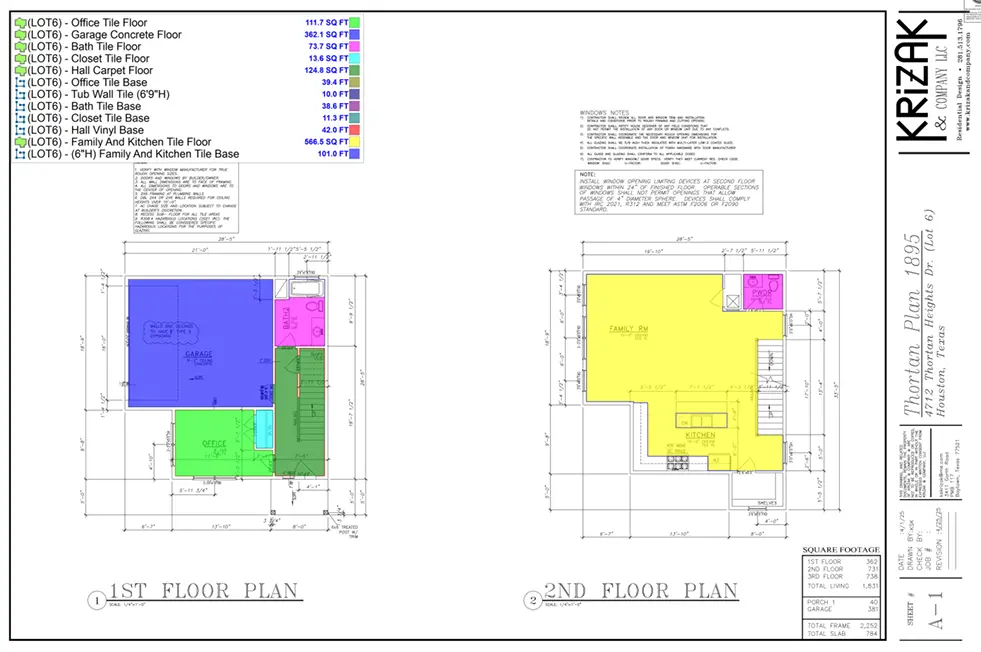
Commercial Flooring Project
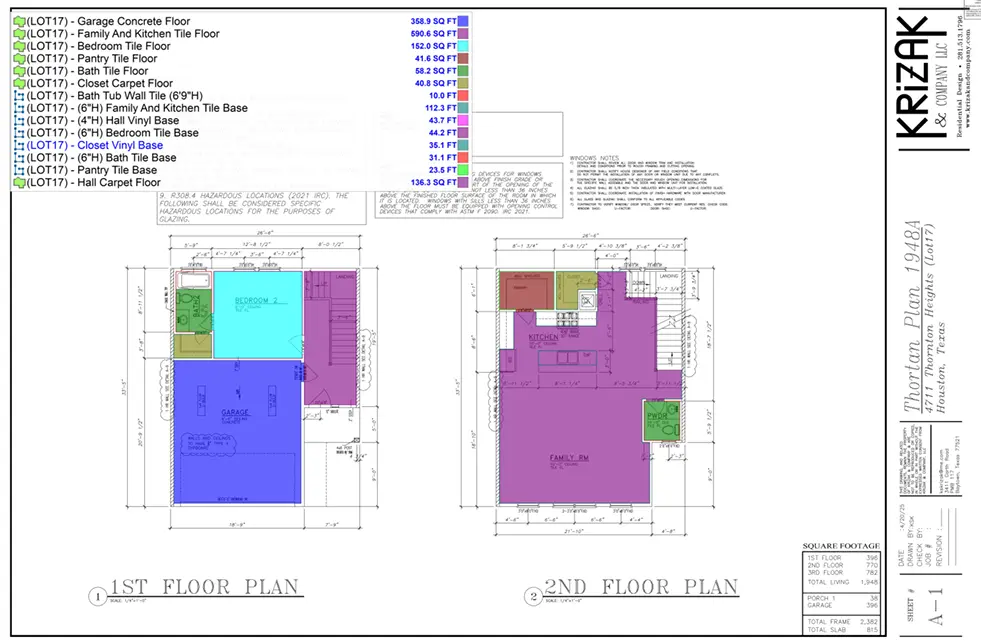
Residential Flooring Project