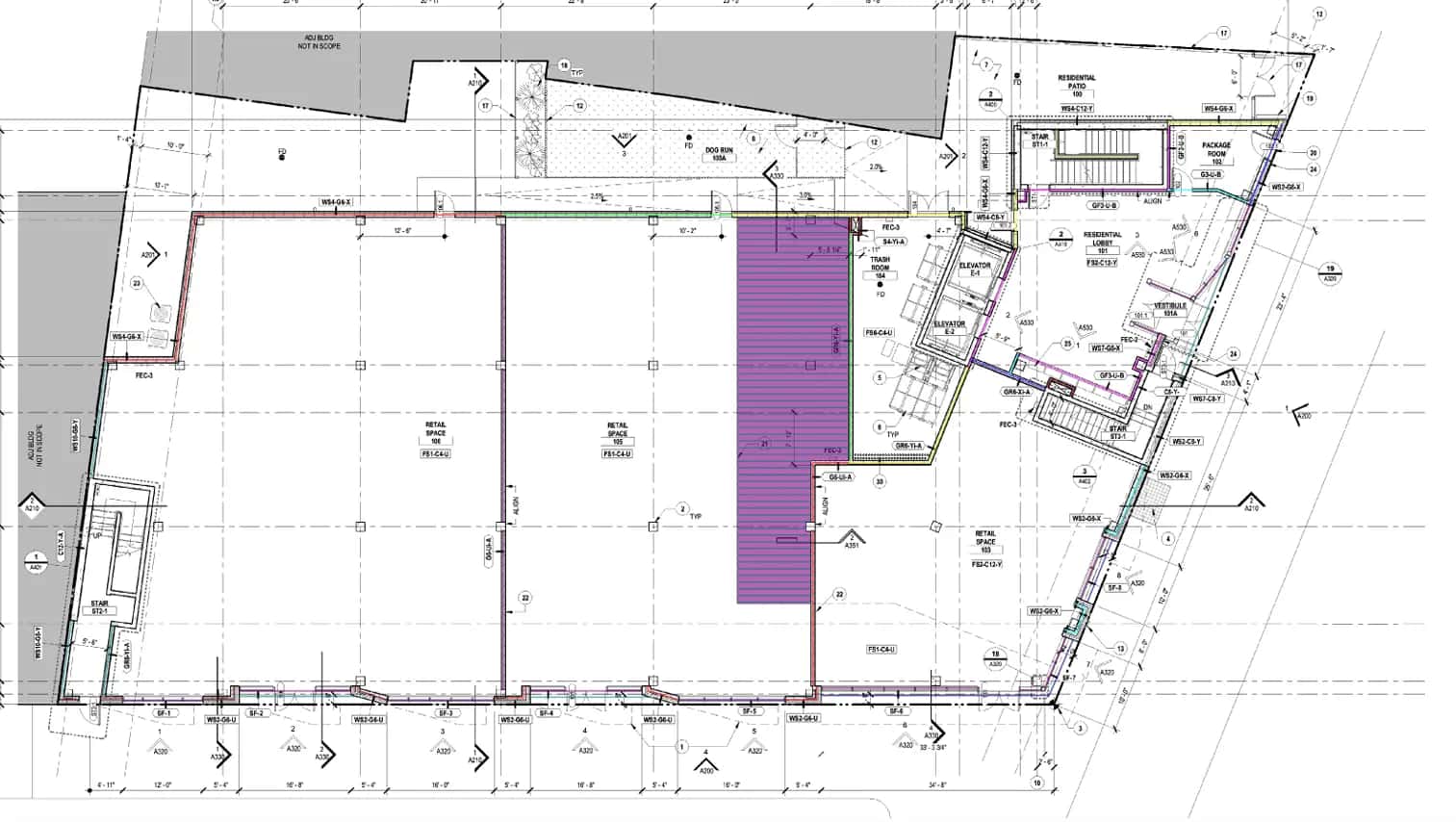
Earthwork Estimating in El Paso, TX
Cut and fill volumes calculated from real 3D surface models, not a flat average-depth guess across an irregular site. Tailored to El Paso County requirements.
Cut and fill volumes calculated from real 3D surface models, not a flat average-depth guess across an irregular site.
Large parts of Texas - the Blackland Prairie belt running through Dallas-Fort Worth and down through Austin and San Antonio, and much of the Gulf Coast clay around Houston - sit on highly expansive clay soils with a Plasticity Index high enough that TxDOT and most local jurisdictions require specific treatment: lime or cement stabilization, moisture conditioning, or deeper over-excavation and select fill replacement than a non-expansive site would ever need. An earthwork estimate that doesn't check soil conditions for the specific site can miss that entire scope of work, and stabilization or select fill isn't a minor line item - on an expansive-soil site it can be one of the largest cost drivers in the whole earthwork package.
Our earthwork estimating calculates cut and fill volumes from actual surface data and flags soil-driven scope like stabilization and over-excavation before pricing, rather than pricing a generic grading estimate and hoping the geotech report doesn't change the number later.
- Cut and fill volumes - calculated from existing and proposed grade surfaces using 3D modeling, quantified in cubic yards, with a mass haul diagram showing where cut material can be reused as fill versus where it has to be exported or imported.
- Stripping and clearing - topsoil stripping, vegetation clearing, and grubbing, quantified by area ahead of any cut/fill calculation.
- Subgrade preparation - proof-rolling, moisture conditioning, and, where geotech reports call for it on expansive soil, lime or cement stabilization depth and coverage.
- Structural excavation and backfill - footing and foundation excavation, over-excavation where required, and structural backfill compaction requirements, quantified separately from bulk sitework earthmoving.
- Import/export and haul distance - where a site doesn't balance on its own, import or export volume is flagged and priced with realistic haul distance, since trucking cost on an unbalanced site is often a significant share of total earthwork cost.
- Erosion and sediment control - silt fencing, inlet protection, and stabilized construction entrances required during earthwork operations under TPDES/SWPPP requirements.
Residential subdivisions. Mass grading across multiple lots, phased to match the subdivision's build-out sequence, with per-lot pad elevations checked against the overall site drainage plan.
Commercial and industrial pads. Building pad preparation sized to the structure's foundation requirements, often with tighter compaction and stabilization tolerances than residential grading.
Roadway and TxDOT work. Earthwork quantified to TxDOT Item 110 (Excavation) specifications and formatted for public-bid submittal, with swell/shrink factors applied per the governing spec.
Two sites with identical cut/fill topography can require very different earthwork scope if one sits on expansive clay and the other doesn't - the expansive-soil site may need six to twelve additional inches of over-excavation and select fill replacement under structures and pavement sections, which changes the actual cut and fill volume calculation, not just the unit price applied to it. Confirming soil conditions against the project's geotechnical report before finalizing cut/fill quantities is the difference between an earthwork estimate that survives the actual dirt work and one that gets revised mid-project when the geotech report's recommendations turn out to require more than the estimate assumed.
Earthwork takeoffs are built using AGTEK and Civil 3D for 3D surface-to-surface volume calculation, cross-checked against the project's geotechnical report where available, and priced with current RSMeans and Texas equipment/labor rates. TxDOT work is quantified to Item 110 (Excavation) and related earthwork specifications.
Earthwork volumes are only as good as the surface model behind them, and getting expansive-soil scope right requires checking the geotech report against the grading plan - a step a generic per-acre estimate skips entirely. Our estimators build the 3D model and flag soil-driven scope before pricing, not after.
The El Paso Market: What Changes Your Earthwork Estimate
El Paso operates as a distinct economic region, heavily influenced by cross-border trade, manufacturing (maquiladoras), and the massive military presence at Fort Bliss. Construction here must account for the Chihuahuan Desert climate-extreme summer heat, high winds, and arid conditions.
Estimating in El Paso requires adjusting for local building practices (like the prevalence of stucco, adobe-style architecture, and flat roofs), understanding the logistics of material delivery to far West Texas, and pricing labor in a unique border market.
The City of El Paso Environmental Services Department handles building permits. Estimates must often account for specific energy code compliance (dealing with solar heat gain) and water conservation measures mandated in this desert environment. We also factor in the specific requirements for building in the foothills of the Franklin Mountains, which can involve difficult site access and rock excavation.
Our Earthwork Estimating Process for El Paso Projects
Confirm existing and proposed grading plans, and check for a geotechnical report indicating expansive-soil treatment requirements.
Existing and proposed surfaces are digitized to calculate precise cut/fill volumes and generate a mass haul diagram.
Stabilization, over-excavation, and select fill scope is quantified separately where geotech conditions require it.
A bid-ready Excel takeoff with cut/fill volumes, import/export flags, and marked-up grading exhibits, typically within 24 hours.
Frequently Asked Questions: Earthwork Estimating in El Paso
What's the difference between earthwork estimating and full sitework estimating?
Earthwork covers cut/fill, grading, and dirt movement specifically. Full sitework estimating (see our Sitework Estimating Services page) bundles earthwork together with underground utilities, stormwater detention, and paving. Standalone earthwork estimates suit contractors who only need the dirt-work scope priced.
Why does Texas soil affect earthwork volume, not just cost?
Expansive clay soils common across much of Texas often require deeper over-excavation and select fill replacement than the base cut/fill topography alone would suggest, which changes the actual volume calculation, not just the unit cost applied to standard cut/fill.
Do you estimate federal projects at Fort Bliss?
Yes. We are experienced with federal contracting requirements, including USACE standards, Anti-Terrorism/Force Protection (AT/FP) construction, and Davis-Bacon prevailing wage rates specific to El Paso County.
Sample Projects Across Texas
Recent takeoffs and estimates delivered for Texas contractors.
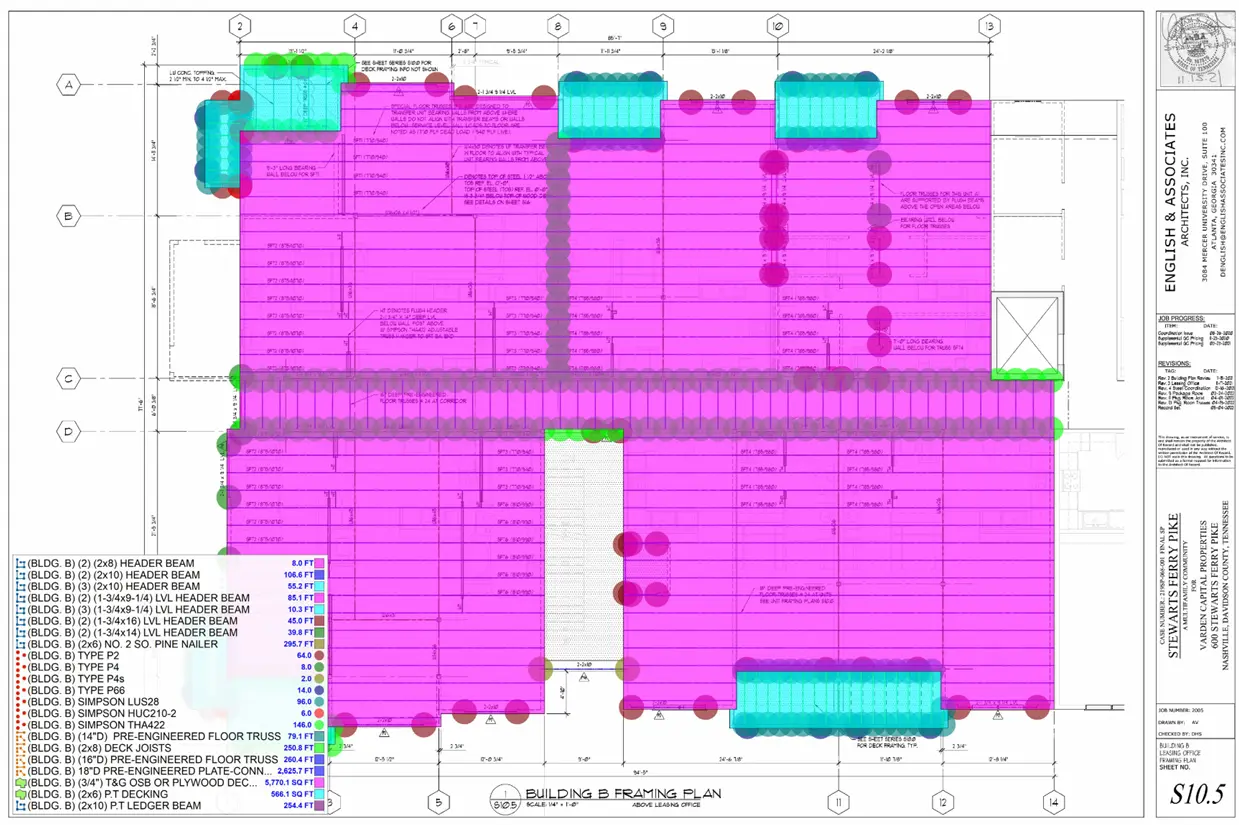
Subdivision Lumber Takeoff
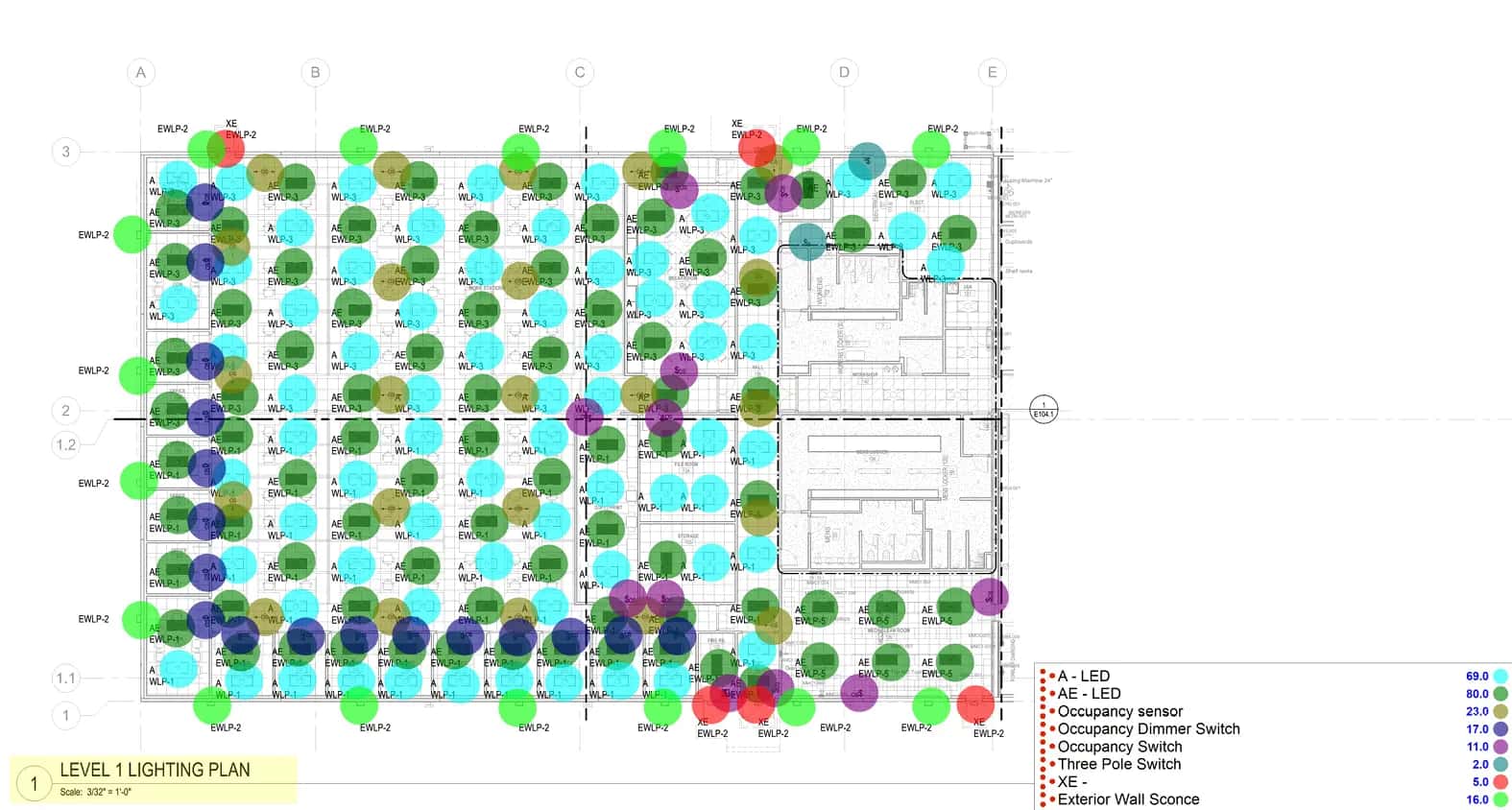
Commercial Electrical Takeoff