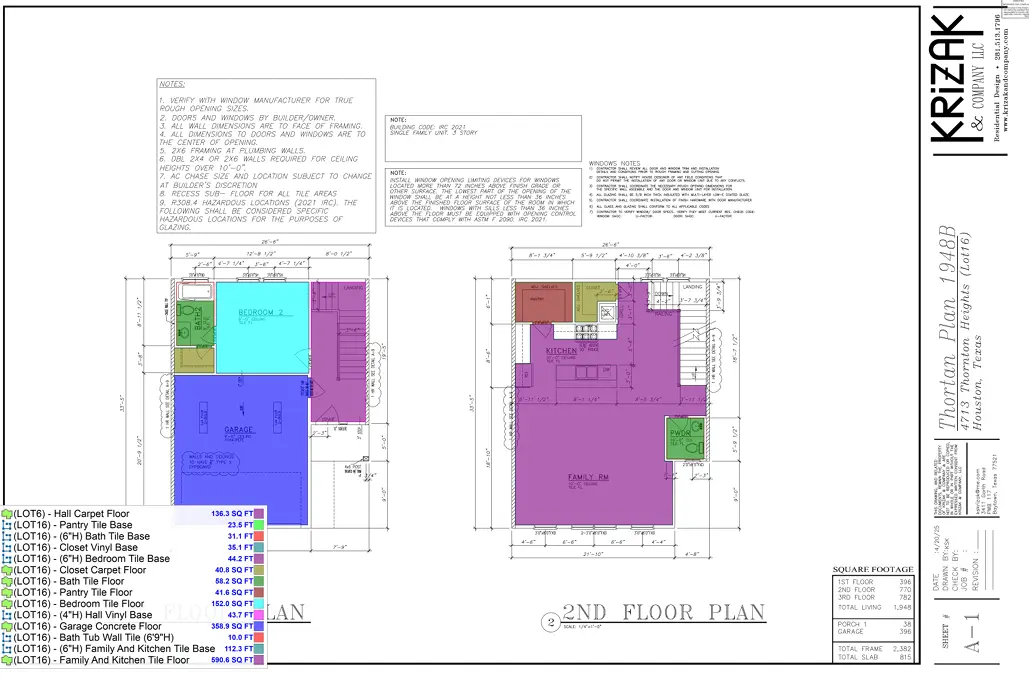
HVAC Estimating Estimating in Frisco, TX
Equipment sized and priced off a real load calculation - not a tonnage-per-square-foot rule of thumb that guesses at what a Texas summer actually does to a building. Tailored to Collin County requirements.
Equipment sized and priced off a real load calculation - not a tonnage-per-square-foot rule of thumb that guesses at what a Texas summer actually does to a building.
An HVAC estimate is only as good as the load calculation underneath it, and load is the input most templated estimates skip. A national average that prices "2 tons per 800 square feet" ignores the fact that Texas sits in the DOE's South Region, which carries a higher minimum efficiency standard than most of the country - 14.3 SEER2 for most residential split systems under 45,000 BTU, against 13.4 in the DOE's North Region - and it ignores that a west-facing glass wall in Dallas or a slab-on-grade home in Houston humidity carries a real, calculable load that a flat square-footage ratio simply doesn't capture. Get the load wrong and everything downstream - equipment tonnage, duct sizing, and the resulting cost - is wrong with it.
Our HVAC estimating starts with the load calculation, not the equipment catalog, so the tonnage and duct design that gets priced actually matches what the building needs.
- Load calculation - residential loads run per ACCA Manual J (heating and cooling load) and equipment matched per Manual S; commercial loads run per ASHRAE methodology, driven by occupancy, glazing, and ventilation requirements.
- Equipment selection and pricing - condensers, air handlers, furnaces, and heat pumps priced to DOE South Region efficiency minimums, which apply statewide in Texas regardless of where in the country a national price sheet was built.
- Ductwork takeoff - supply, return, and exhaust ductwork sized per Manual D (residential) or engineered duct design (commercial), quantified by material, gauge, and insulation type.
- Refrigerant piping - line set sizing and refrigerant type priced to the specified equipment, accounting for ongoing federal refrigerant phase-down rules that affect both equipment cost and availability.
- Controls and thermostats - from basic residential thermostats to commercial BMS integration points, priced as their own line item rather than bundled into equipment cost.
- Ventilation - outdoor air, exhaust, and makeup air systems sized to occupancy and code minimums, priced separately from general supply/return ductwork.
Residential. Central air and heat pump systems sized per Manual J/S/D, priced to actual house load and DOE South Region equipment minimums - not a flat tonnage-per-square-foot guess.
Light commercial. Rooftop package units and split systems sized to ASHRAE-calculated occupancy load, common on retail, office, and small medical buildouts.
New construction vs. replacement. New-construction estimates size equipment to the building's full calculated load; replacement/retrofit estimates account for existing duct condition and any load changes since original installation (added glazing, insulation upgrades, or occupancy changes).
Undersized equipment runs constantly through a Texas summer and never quite catches up on the hottest days; oversized equipment short-cycles, wastes installation dollars on capacity the building doesn't need, and struggles with humidity control because it satisfies the thermostat before it's run long enough to properly dehumidify the space. Both mistakes trace back to the same root cause - pricing equipment off a guessed tonnage instead of a real Manual J or ASHRAE calculation. Running the load calculation first, before selecting equipment, is what keeps a Texas HVAC estimate from repeating that mistake.
Load calculations are run to ACCA Manual J/S/D (residential) and ASHRAE methodology (commercial). Ductwork and equipment takeoffs are built in Bluebeam and FastDUCT/FastPIPE, with equipment priced against current DOE efficiency standards and cross-checked against RSMeans and current Texas labor rates.
Load calculations and equipment pricing require specific technical knowledge - Manual J/S/D methodology, DOE regional standards, and current refrigerant rules aren't something a general estimator picks up casually. Our estimators run the calculation correctly the first time, so the tonnage you bid is the tonnage the building actually needs.
The Frisco Market: What Changes Your HVAC Estimating Estimate
Frisco has transformed from a suburban bedroom community into a massive economic center. The market is defined by explosive, high-end growth: the "$5 Billion Mile" (The Star, Frisco Station, Hall Park), the new PGA of America headquarters, Universal Studios development, and sprawling luxury residential communities.
Estimating in Frisco means dealing exclusively with premium construction. The city demands high architectural standards, extensive landscaping, and top-tier infrastructure.
The City of Frisco has some of the most stringent development and aesthetic standards in Texas. Commercial projects face strict masonry requirements (often 80-100% brick/stone facade), concealed rooftop equipment mandates, and heavy landscaping ordinances. Our estimates ensure these premium, code-mandated materials are fully quantified so your bid isn't caught short.
Our HVAC Estimating Estimating Process for Frisco Projects
Run Manual J or ASHRAE load calculations from the plan set to determine actual heating and cooling demand.
Select and price equipment meeting DOE South Region minimums, matched to the calculated load.
Digital measurement of all ductwork and refrigerant piping, quantified by material, size, and insulation.
A bid-ready Excel estimate with load calculation summary, equipment schedule, and takeoff backup, typically within 24 hours.
Frequently Asked Questions: HVAC Estimating Estimating in Frisco
Why does a Texas HVAC estimate need a Manual J calculation instead of a square-footage estimate?
Square-footage ratios ignore glazing, orientation, insulation, and occupancy - all of which meaningfully change actual load. A Manual J calculation accounts for these factors directly, which is why it determines equipment tonnage more accurately than a flat ratio.
What's the difference between SEER2 minimums in Texas versus other states?
Texas falls entirely in the DOE's South Region, which carries a higher minimum cooling-efficiency standard (14.3 SEER2 for most residential split systems) than the DOE's North Region (13.4 SEER2). That's a real equipment cost floor, not a rounding difference.
Do your estimates account for Frisco's strict exterior masonry rules?
Yes. We carefully review the exterior elevations against Frisco's zoning requirements to ensure the estimate captures the premium cost of required brick, stone, or architectural concrete, rather than cheaper alternatives.
Sample Projects Across Texas
Recent takeoffs and estimates delivered for Texas contractors.
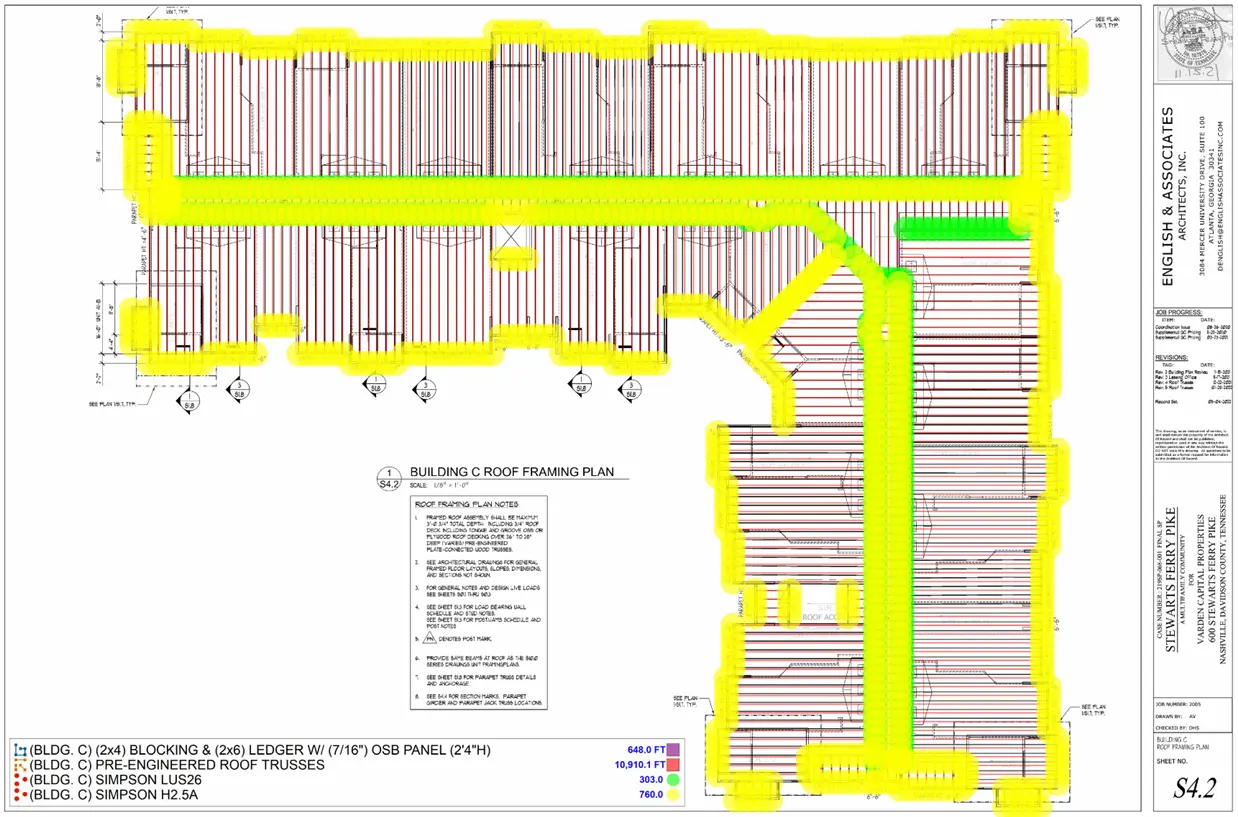
Custom Home Lumber Package
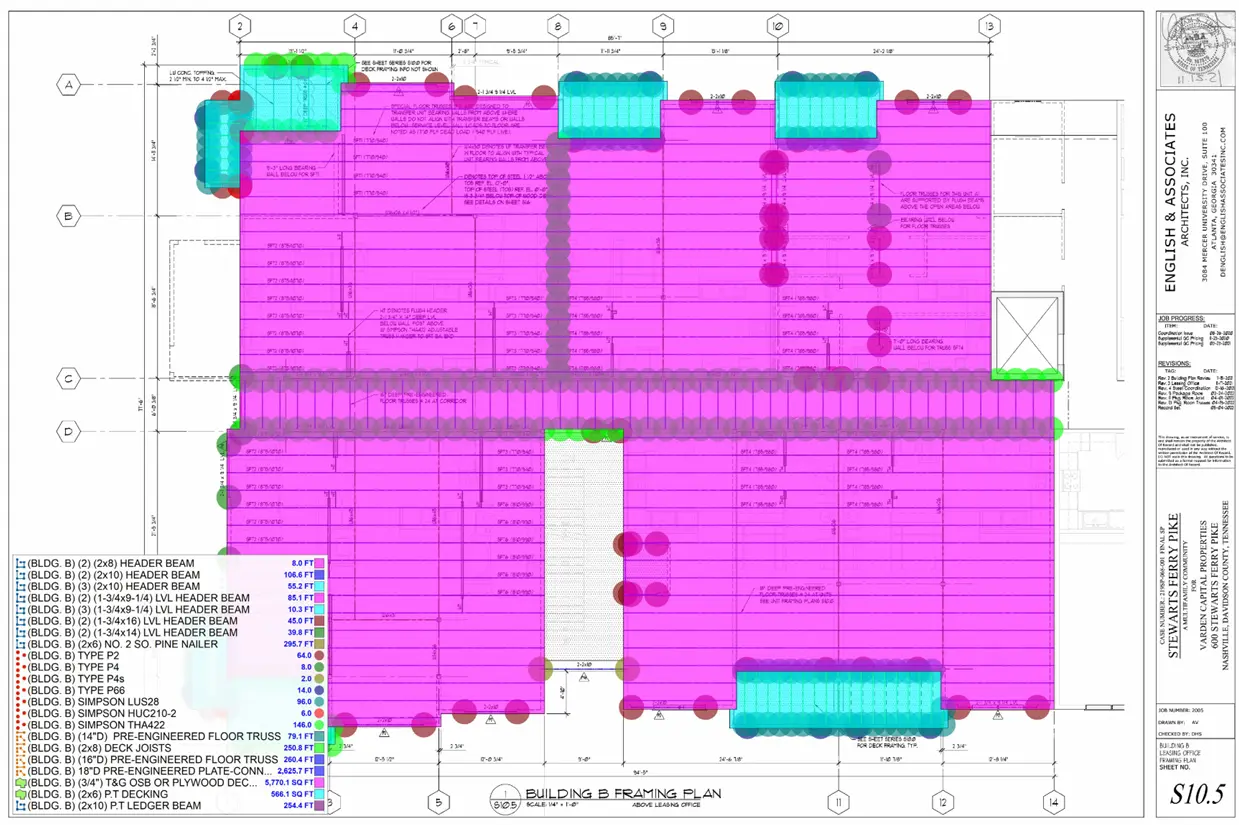
Subdivision Lumber Takeoff