CPM Scheduling Estimating in Odessa, TX
Critical Path Method schedules built to the same standard a public agency reviewer or a GC's scheduling department expects - not a Gantt chart assembled the night before submittal. Tailored to Ector County requirements.
TxDOT and most Texas municipal owners require a Critical Path Method schedule on public work above a set contract value, and the requirement isn't a formality - a schedule that doesn't logically tie every activity, show a real critical path, and update against actual progress gets rejected at submittal and costs the contractor the float they were counting on to absorb the review cycle. On private commercial work, the risk runs the other direction: a GC without a credible baseline schedule has no defensible position when a delay dispute turns into a change order fight, because there's no logic-tied record of what was actually critical and what had slack to give.
Our CPM scheduling services build the schedule the way it needs to hold up under review - logically sequenced, resource-loaded where required, and structured so the critical path is demonstrable, not just asserted.
- Activity breakdown - the full scope of work broken into individual activities with realistic durations, sized to the level of detail the contract requires (summary-level for a rough baseline, activity-level for a detailed construction schedule).
- Logic and sequencing - predecessor/successor relationships (finish-to-start, start-to-start, lag) tying every activity together so the schedule calculates a true critical path, not just a bar chart with dates typed in.
- Critical path identification - the longest sequence of dependent activities that determines the project's earliest possible completion date, along with total float on every non-critical activity.
- Resource and cost loading - labor, equipment, and cost tied to individual activities where the contract requires resource-loaded or cost-loaded schedules (common on public and bonded work).
- Milestones and constraints - contract milestones, notice-to-proceed dates, and any owner-imposed constraints built in as hard dates the schedule logic respects.
- Schedule updates and revisions - periodic progress updates against the baseline, with variance and delay analysis when actual progress diverges from plan.
Baseline schedule. The initial as-planned schedule submitted at or near contract award, establishing the critical path and milestone dates the project will be measured against for the rest of its duration.
Progress updates. Periodic (typically monthly) updates reflecting actual percent-complete and start/finish dates against the baseline, required on most public contracts and standard practice on larger private work.
Delay and time impact analysis. When a delay occurs, a time impact analysis (TIA) inserts the delay event into the schedule logic to show its actual effect on the critical path and completion date - the analysis method most owners and courts expect to see behind a schedule-based claim, rather than a narrative assertion of lost time.
Schedule recovery. When a project falls behind, a recovery schedule re-sequences remaining work - added shifts, resequenced activities, additional crews - to show a credible path back to the contract completion date.
A schedule with dates that look reasonable but logic that doesn't hold up is worse than no schedule at all, because it creates false confidence. The DCMA 14-Point Assessment - the standard the Defense Contract Management Agency (and, by extension, most public-sector schedule reviewers) uses to evaluate schedule quality - checks things like the percentage of activities with no logic ties, negative float, and hard constraint dates that override the calculated critical path. A schedule that fails those checks isn't just an administrative problem; it means nobody, including the contractor, actually knows what's driving the completion date. We build schedules to pass that level of scrutiny from the baseline forward, not patch the logic after a reviewer flags it.
Schedules are built in Primavera P6, the standard for public and larger commercial work in Texas (including most TxDOT contracts), or Microsoft Project where the contract specifies it. Schedule quality is checked against DCMA 14-point assessment criteria, and delay analysis follows recognized forensic scheduling methodology consistent with AACE International's Recommended Practices.
A credible CPM schedule takes real scheduling expertise, not just software familiarity - logic errors and constraint misuse are exactly what a schedule reviewer is trained to catch. Our schedulers build to submittal standards from the baseline forward, so the schedule holds up under review instead of getting kicked back for revision.
The Odessa Market: What Changes Your CPM Scheduling Estimate
While neighboring Midland serves as the Permian Basin's corporate headquarters, Odessa is its operational and industrial backbone. The construction market here is dominated by heavy industrial projects: oilfield service company yards, trucking terminals, welding and fabrication shops, pump stations, and the massive infrastructure required to support oil and gas extraction operations.
Estimating in Odessa shares many of Midland's challenges—extreme labor cost volatility, remote logistics, and compressed schedules—but with an even heavier emphasis on industrial and heavy-civil construction. Workforce housing is also a significant sector, with high demand for apartments and temporary housing facilities during production booms. The extreme West Texas climate (110°F summers, dust storms, and high UV exposure) dictates specific material selections for exterior and roofing systems.
The City of Odessa Building Department handles permits, with many projects also requiring Ector County approval for facilities outside city limits. Industrial construction in Odessa often involves specialized permitting for hazardous materials storage, petroleum facility setback requirements, and specific fire code compliance for welding shops and equipment maintenance facilities. Our estimates capture these industrial permitting costs and the premium materials required for facilities operating in harsh oilfield environments.
Our CPM Scheduling Estimating Process for Odessa Projects
We review the contract's scheduling specification (submittal format, update frequency, resource-loading requirements) and your project scope of work.
Work is broken into activities, sequenced with predecessor/successor logic, and durations assigned based on realistic productivity.
The schedule is calculated to identify the critical path and float, then reviewed for logic errors before delivery.
You receive the baseline schedule file (Primavera P6 .xer or MS Project) plus a PDF summary. Ongoing monthly updates available on request.
Frequently Asked Questions: CPM Scheduling Estimating in Odessa
Does TxDOT require a CPM schedule on every project?
TxDOT requires a CPM-based progress schedule on most projects above a set contract value, typically built in Primavera P6, with specific submittal and update requirements defined in the project's special provisions - requirements vary by contract, so we confirm the specific scheduling spec before building.
What's the difference between a baseline schedule and a schedule update?
The baseline is the original as-planned schedule submitted near contract start. Updates are periodic revisions showing actual progress against that baseline - most contracts require updates monthly.
Do you estimate oilfield service yards and industrial facilities in Odessa?
Yes, this is a core specialty. We estimate pipe yards, equipment maintenance shops, welding facilities, truck terminals, and pump stations, pricing the heavy-duty concrete, industrial steel structures, and specialized MEP systems these facilities require.
Sample Projects Across Texas
Recent takeoffs and estimates delivered for Texas contractors.
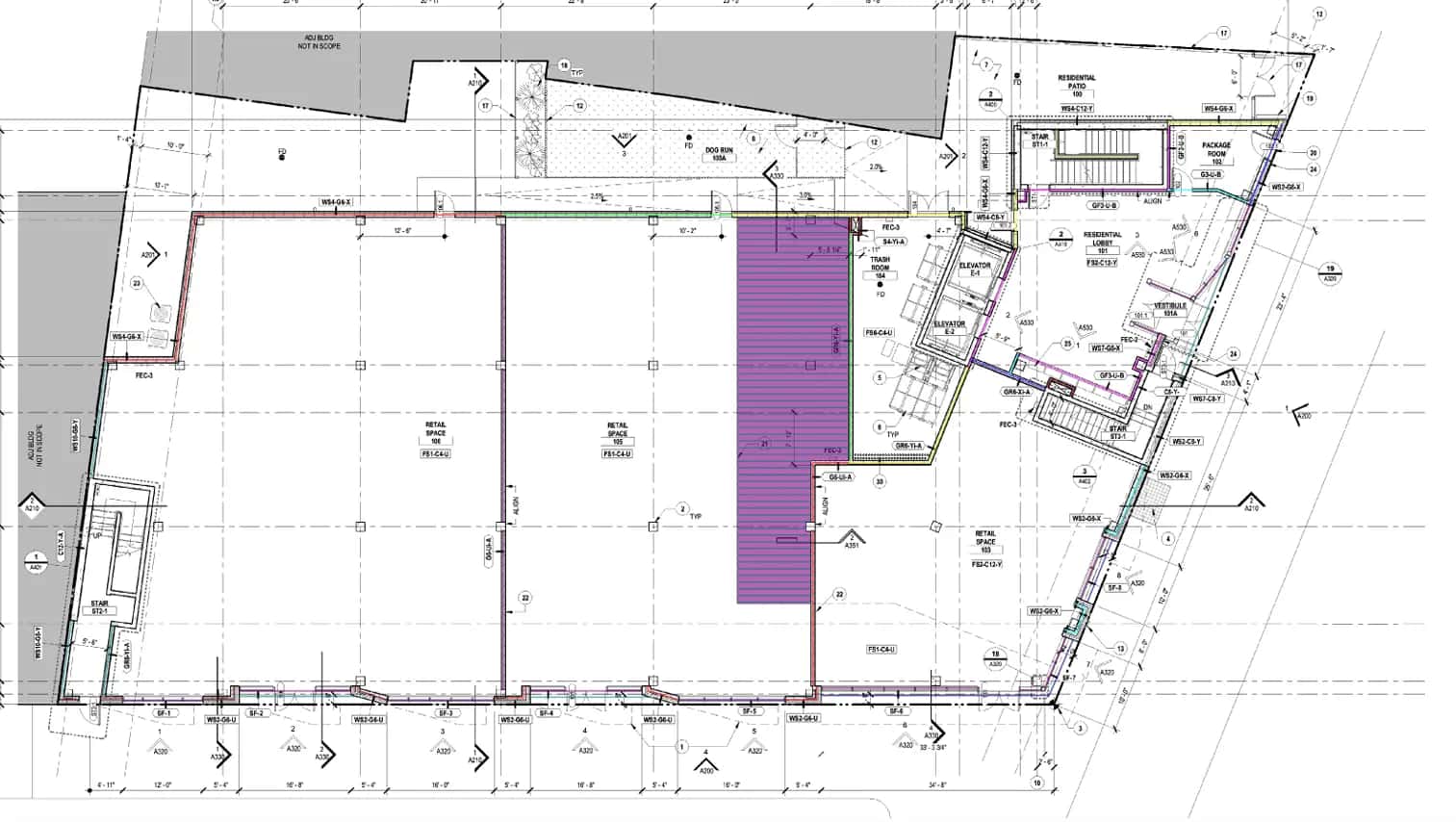
Multi-Family Framing
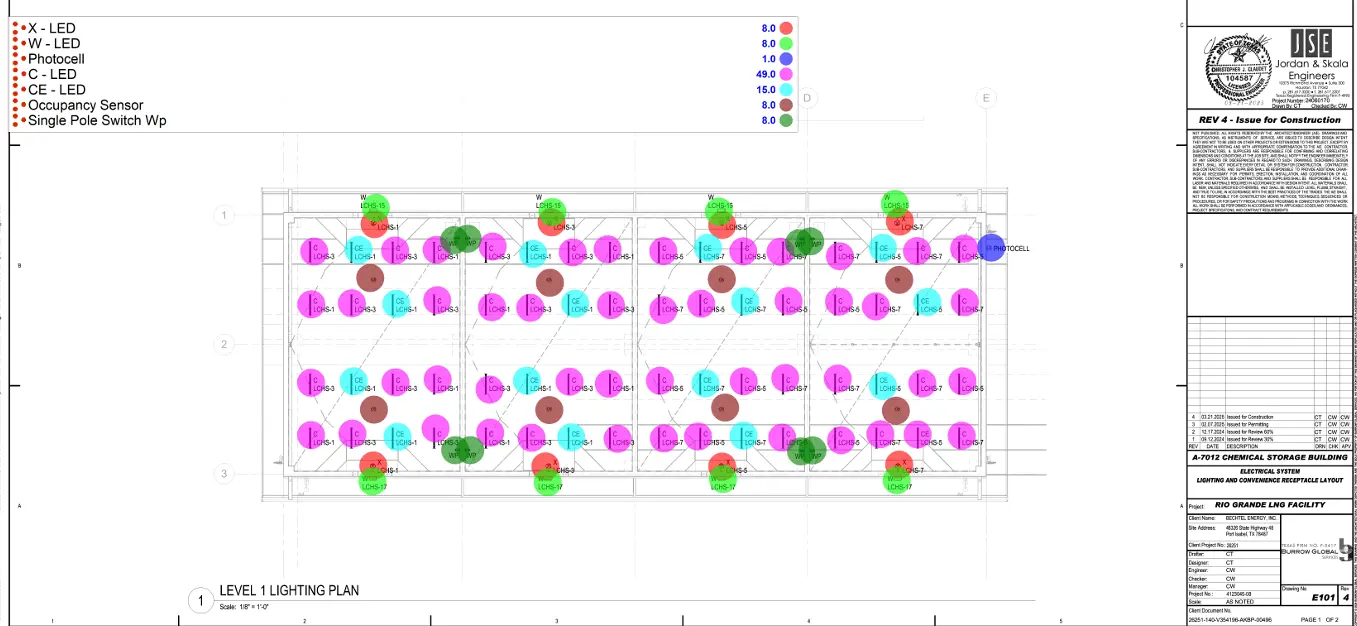
Industrial Warehouse Wiring